


Albino Vellini inside the shop, next to the frame for shoeing oxen
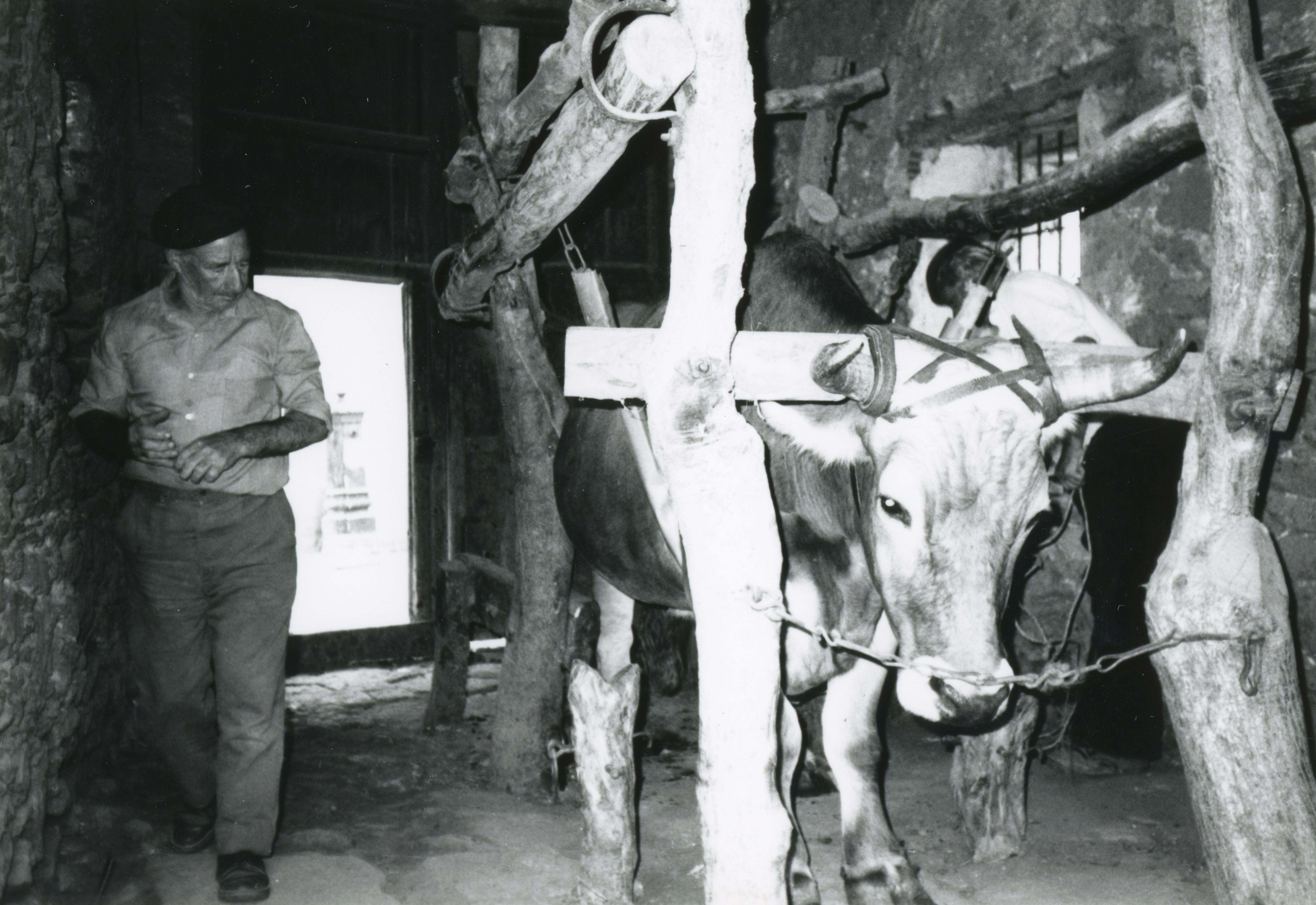
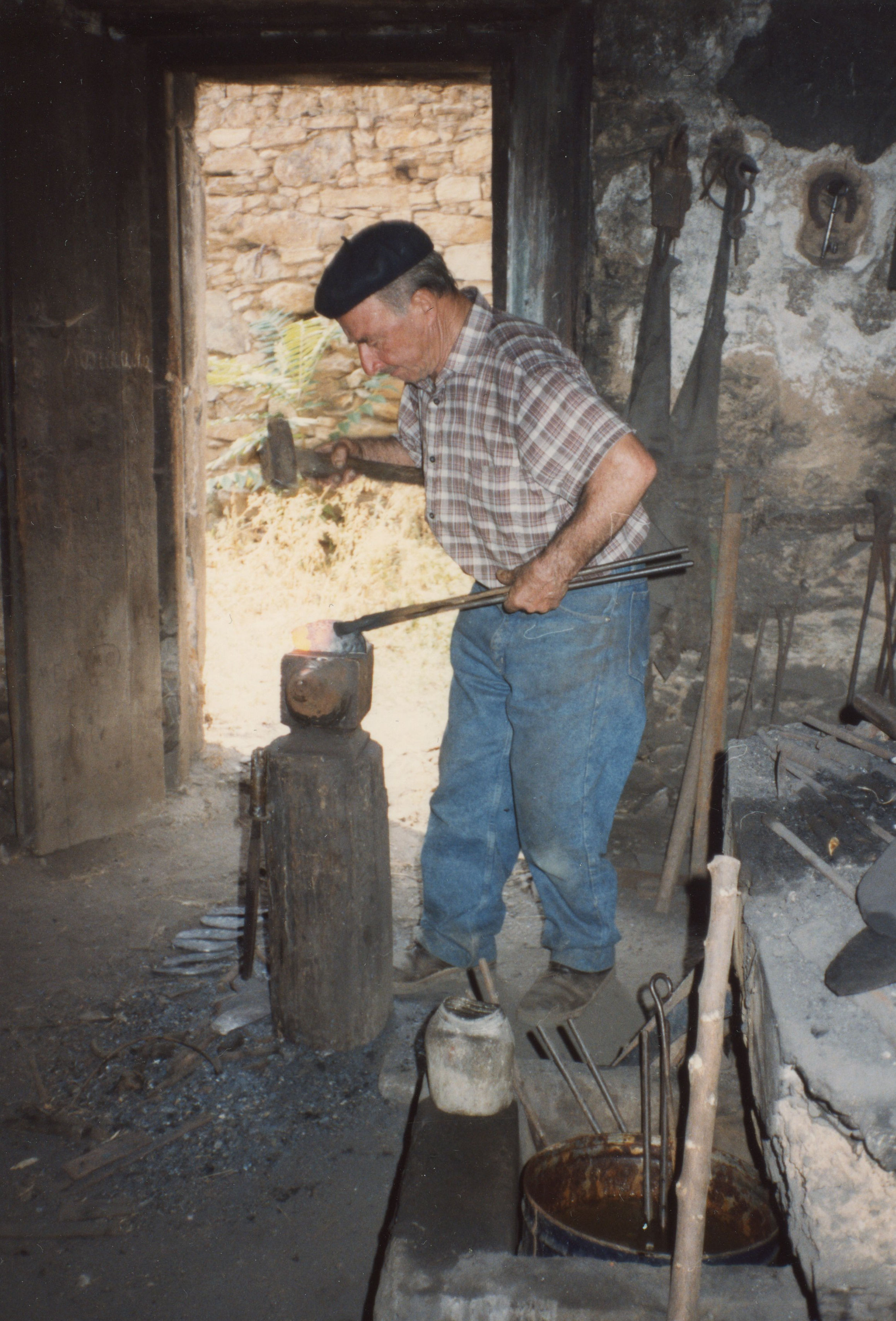
Albino Vellini, last blacksmith of Armungia
"My father was the son of a blacksmith, the grandson of a blacksmith. It used to be like that: if you were the son of a farmer, you had to be a farmer, like I became a blacksmith because my father was a blacksmith." The story of Albino Vellini , born in Armungia on February 29, 1920, the last blacksmith in the village, tells the story of a family that came from afar: a story made of wisdom, hard work, and precision, iron to be forged and tools to be produced.
The Vellini family from Piedmont to Sardinia
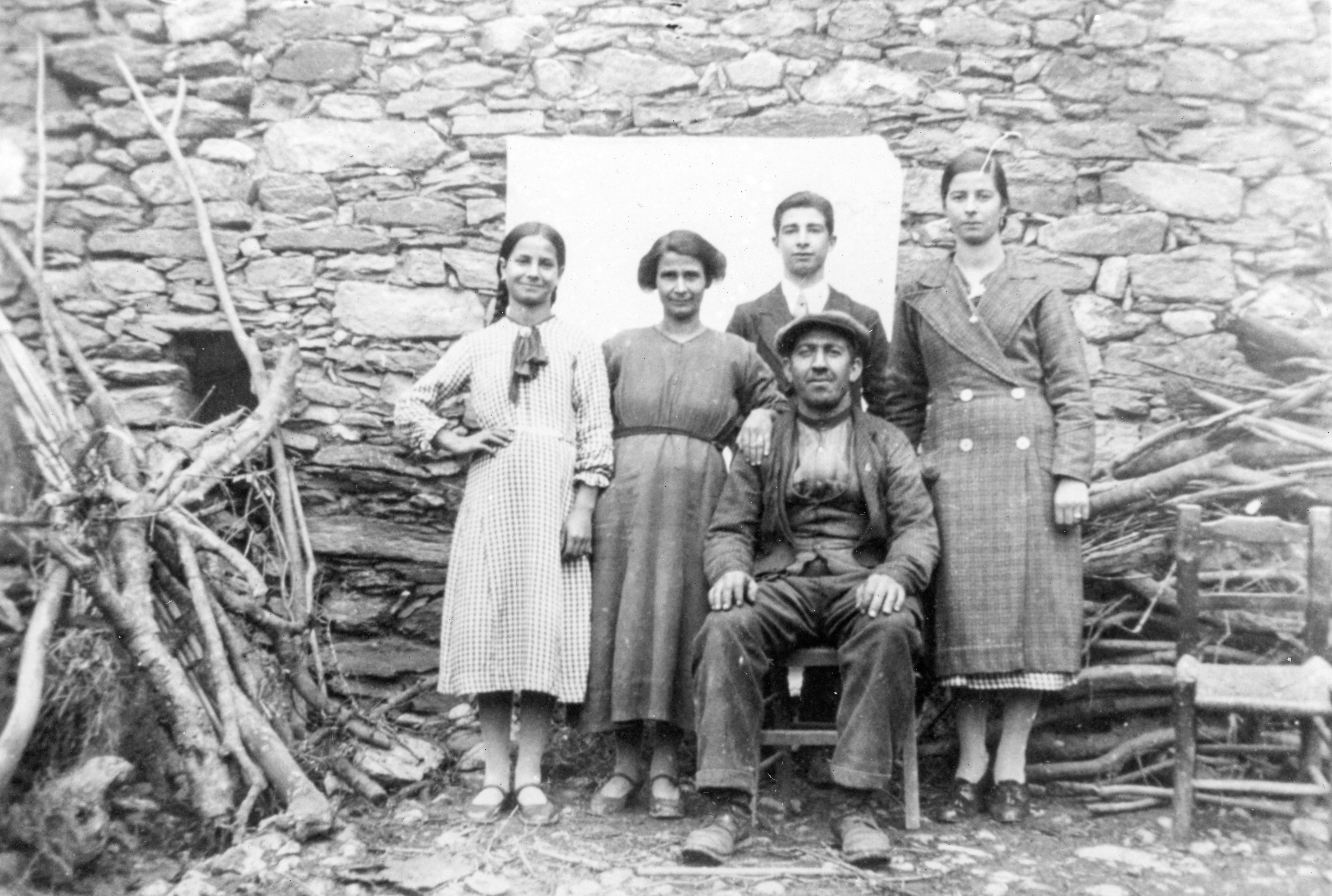
The first Vellini to arrive in Sardinia was Giovanni, who arrived in the mid-19th century from the municipality of Briga Marittima, now La Brigue, in the Maritime Alps on the border between France and Piedmont. The reasons that led Giovanni Vellini to move to the island remain unclear. What is certain is that he settled in Ogliastra, in Tertenia, where he married Greca Sotgia and started a family. Of his sons, Raimondo and Tommaso found work in two important mines located between Gerrei and Sarrabus, one for antimony and the other for silver, during the years of the development of the Sardinian mining industry : "Raimondo and Tommaso," Albino recalled precisely, "had come to set up the mechanical washery in the Su Suergiu mine , in Villasalto , and in the Monte Narba mine , in San Vito . I never knew my grandfather. My father had been an orphan for eleven years." Having settled in Armungia after marrying Teresa Dessì, whom he perhaps met in the mine, Raimondo died in 1902 at just 46 years old, leaving behind two sons, Giuseppe, father of Albino, and Vincenzo.
The blacksmith's shop in Armungia
The two brothers thus found themselves facing the hardships of working life from a young age, learning the art of iron forging . Vincenzo then left Sardinia to move to Lazio, in Albano Laziale, and there he opened a shop known as "Rinomata mascaria del sardignolo Vincenzo Vellini". Giuseppe, however, remained in Armungia and after the death of his mother, he also decided to open a shop , transforming the old family home into a workshop. In the portico, once used to shelter domestic animals, he installed the loom for the oxen were shod, while the kitchen was transformed into a forge for iron. From a place for storing food and wine barrels, the warehouse became a storage space for iron and coal supplies, while the old bedroom on the first floor, constantly filled with smoke from the forge below, fell into disuse.
The tools of the trade and the work of the blacksmith
Albino Vellini began working as a child as his father's apprentice, learning to make and repair all the tools essential to farming , as well as household items such as skewers, tripods, keys, and latches . He inherited his father 's blacksmith shop and ran it for several decades: "We worked mostly in the winter," he said, "but there was work needed in every season. When the fields were being prepared, after the threshing, after August, we began preparing the plows, plowshares, hoes, so we worked continuously to repair what the farmers consumed... When we cut the hedges and prepared the land, we needed billhooks. We got to have up to a hundred billhooks to sell, and not only people from Armungia came, but also from neighboring villages, because the billhooks my father made were beautiful."
The recovery of iron and the memory of the workshop
Casting his mind back to his life's work, Albino still remembered: "All the scrap was recycled. With a piece of old iron, a new piece of iron had to be made. With muzzle-loading rifles that didn't work, for example, they made fire pokers. When they built the Rinascente in Cagliari, my father had bought the contractor the "He took the remaining iron and made horseshoes and oxen shoes with it." After closing down the workshop, Albino Vellini was, until his passing, the living memory of the small museum created inside it, set up around his tools and his testimonies. The Blacksmith's Shop continues to bear witness to his history today.
