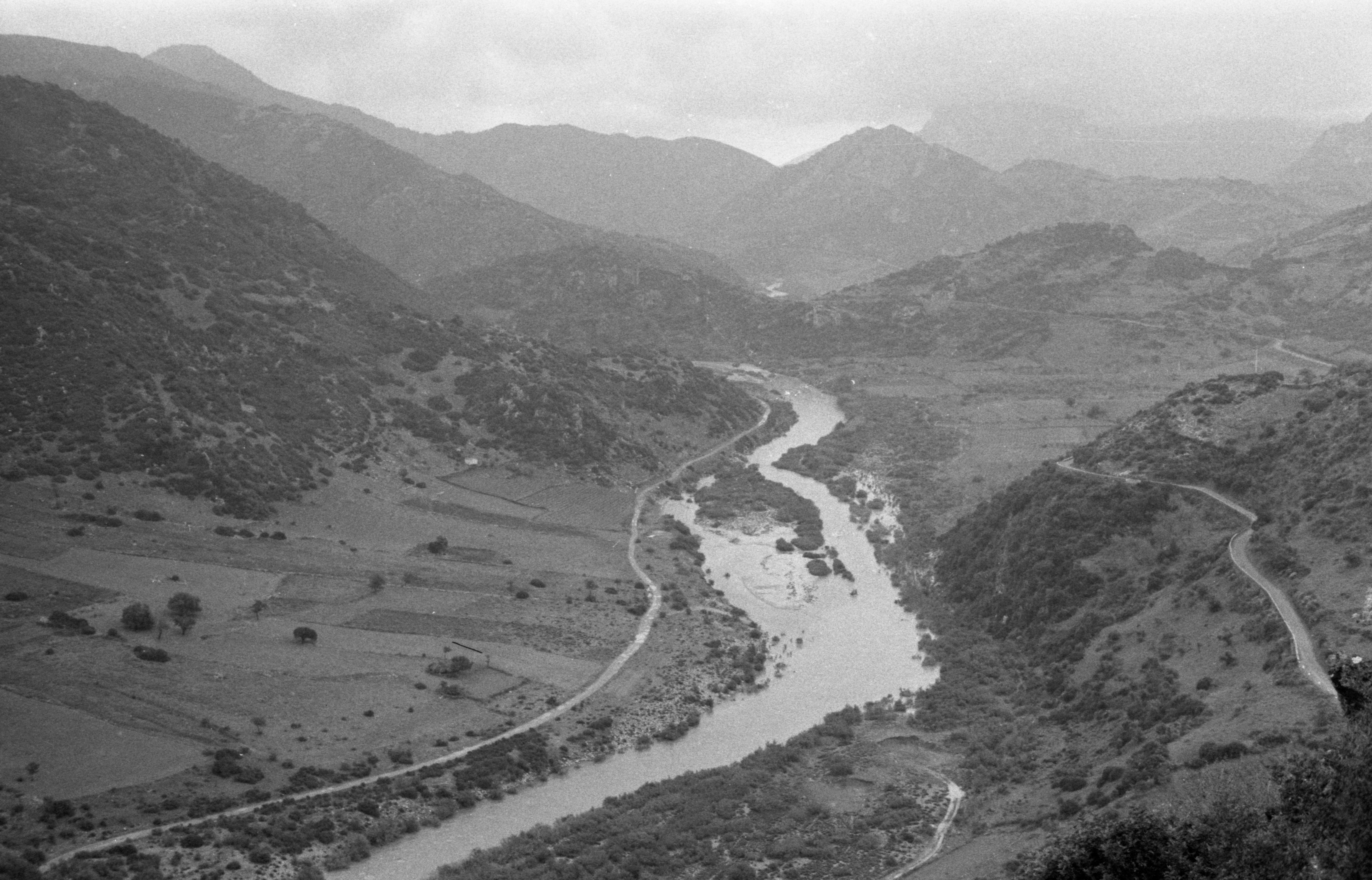
The Flumendosa in flood in Armungia, in the autumn of 1970
The Flumendosa
For minerals, as for coal and sandstone, the lack of a bridge made crossing the river considerably difficult. For centuries, the people of Armunga had relied on boat ferries to cross , which ran several times a day from the most accessible points. Only in the summer months was it possible to easily cross on foot. The Flumendosa was, after all, the most dangerous river in Sardinia, claiming drowning victims every year. On December 30, 1865, three young women from San Vito were swept away by the current and later found at the mouth, still embracing each other.
Emilio Lussu and the construction of the bridge over the Flumendosa
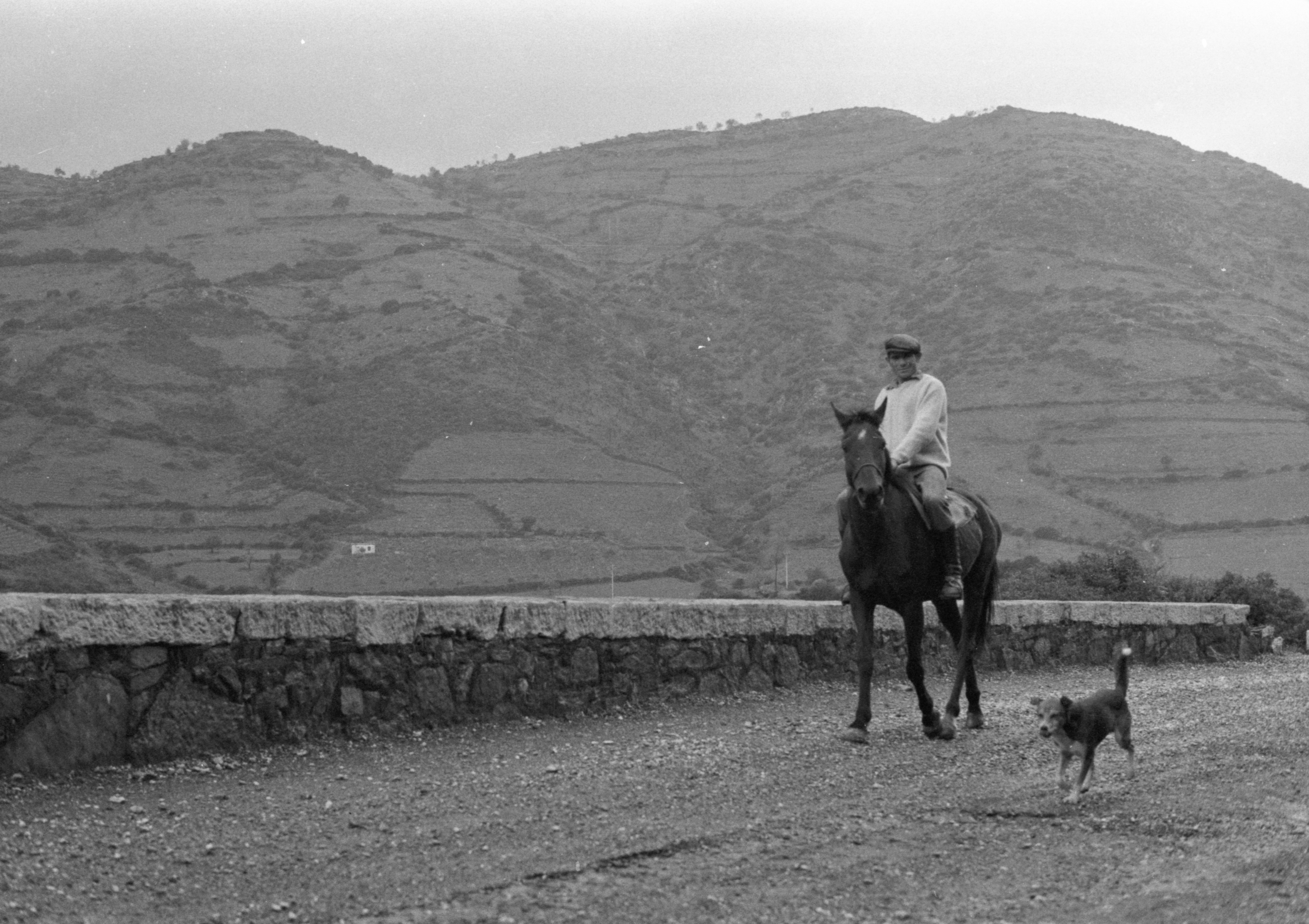
In the winter months, the raging floods sometimes made even the boat ferry service impossible, preventing communication between the two parts of the territory: " When the Flumendosa is in flood," wrote Emilio Lussu in 1957, "the farmers and shepherds, who are on the other side of the river, cannot communicate with the villages and remain blocked. And those in the village are equally blocked. You cannot cross the Flumendosa in flood except on horseback, an excellent swimmer." That year Lussu met the head of government Adone Zoli in the corridors of the Senate "and told me that, out of personal pride, I had never asked him for a favor, neither as Minister nor as Prime Minister. I immediately asked him to build a small bridge over the Flumendosa. He agreed, assuring me that he would immediately discuss the matter with Togni, his Minister of Public Works. That same day he informed me of Togni's favorable opinion on the matter." Despite the government's interest, the bridge still had to wait before being built. It was finally completed in the late 1960s: the people of Armung could finally cross the river easily .
The Sa Lilla mine between Armungia and Villasalto
The Sa Lilla mine , located between the territories of Armungia and Villasalto, was active for several decades between the nineteenth and twentieth centuries. It was part of a complex of mines which also included the Parredis mine, on the opposite side of the same mountain range. A mixture of galena and blende was extracted there. From Quintino Sella's report to the parliamentary commission of inquiry "On the conditions of the mining industry in Sardinia" (1871), we learn that work on the site was started in 1863 by the engineer Wellens and continued by the Sardinian-Belgian Company until 1869. Despite the exploitative conditions and the lack of safety, work in the mine was highly sought after as it allowed one to escape at least in part from the precariousness of agricultural work, cyclically marked by drought and poor harvests.
Murdega, the woods and the work among mines, coal and sandstone
The Murdega woods, beyond the Flumendosa , were frequented by miners but also by farmers, shepherds from Armungia, transhumant shepherds from Ogliastra and Barbagia, sawyers, and charcoal burners. Under specific municipal concessions, the latter carried out both wood cutting and charcoal production. In the late 19th century, the Armungia area was affected by construction work on state road 387, which ran from the outskirts of Cagliari to Muravera, passing through Parteolla and Gerrei. In connection with this work, a sandstone quarry was opened on the Sa Perda Lada plateau, which supplied the blocks used to build the roofs of the walls and bridges of the state road. The opening of the new road also brought about significant logistical changes for the Sa Lilla mine, which had previously gravitated directly towards Cala Murtas , on the coast. A new route was built with embankments and embankments, as well as a new deposit on the Murdega valley floor, from which the mineral could then reach the Flumendosa.