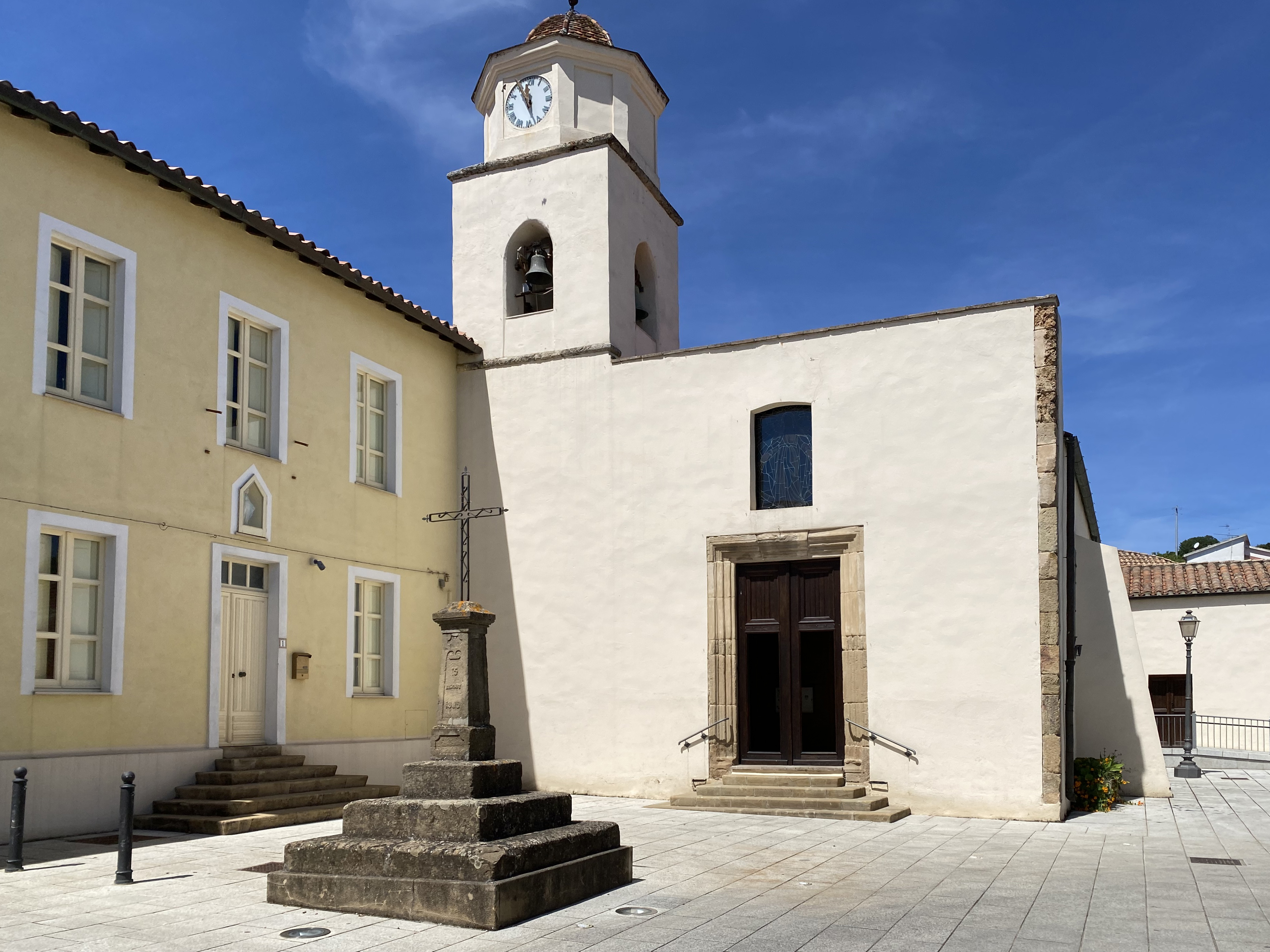
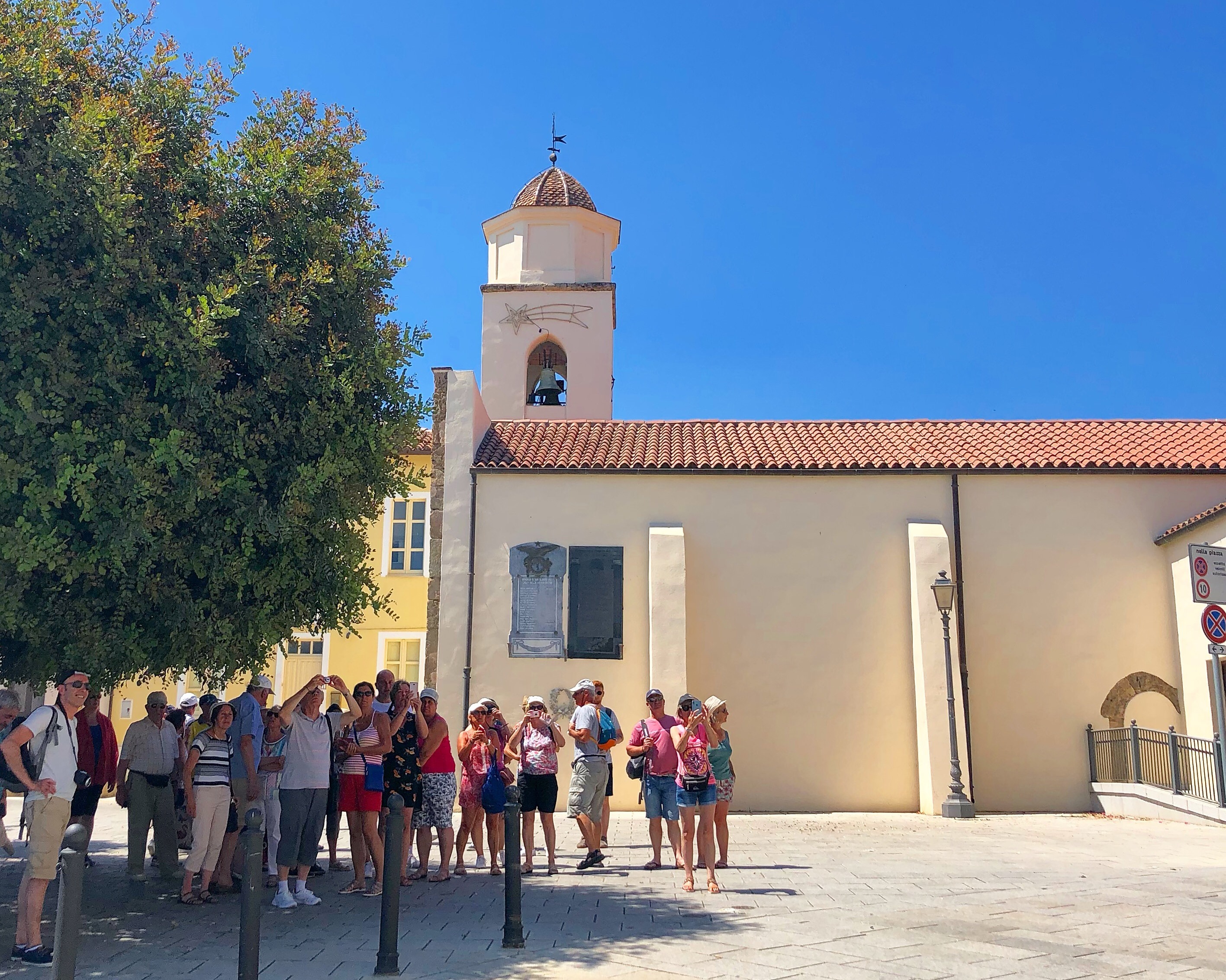
The historic parish between Gothic architecture and sacred art The Church of the Blessed Virgin Immaculate is the Parish church of Armungia, a small village in southeastern Sardinia. Built between the late sixteenth and early seventeenth centuries, it represents an important example of late Gothic religious architecture , a testament to the town's artistic and spiritual history. In addition to its liturgical function, the church houses valuable sacred objects and preserves traces of the connection between the local community and the Lussu family .
Architectural origins and structure
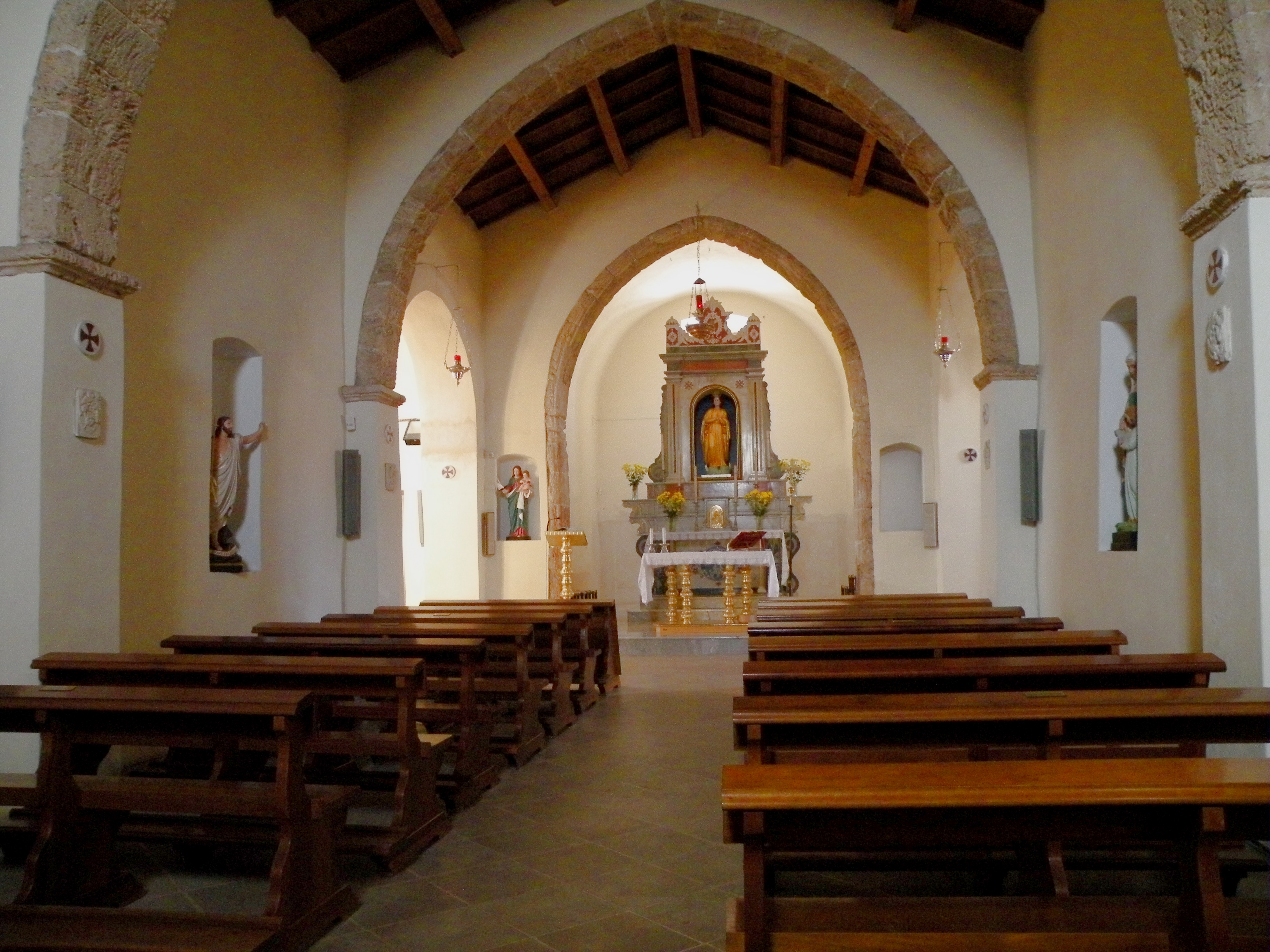
The building has a Latin cross plan and a single nave punctuated by exposed stone pointed arches, typical elements of late Gothic architecture. The original construction dates back to the late 16th century, a period in which the presence of stable religious communities in Sardinia was growing in rural centers.
Inside you will find:
- a baptismal font and a holy water stoup in carved sandstone, dating back to the first half of the seventeenth century
- a bronze bell from 1668
- various liturgical objects in silver dating between the 17th and 19th centuries
The altar and the connection with the Lussu family
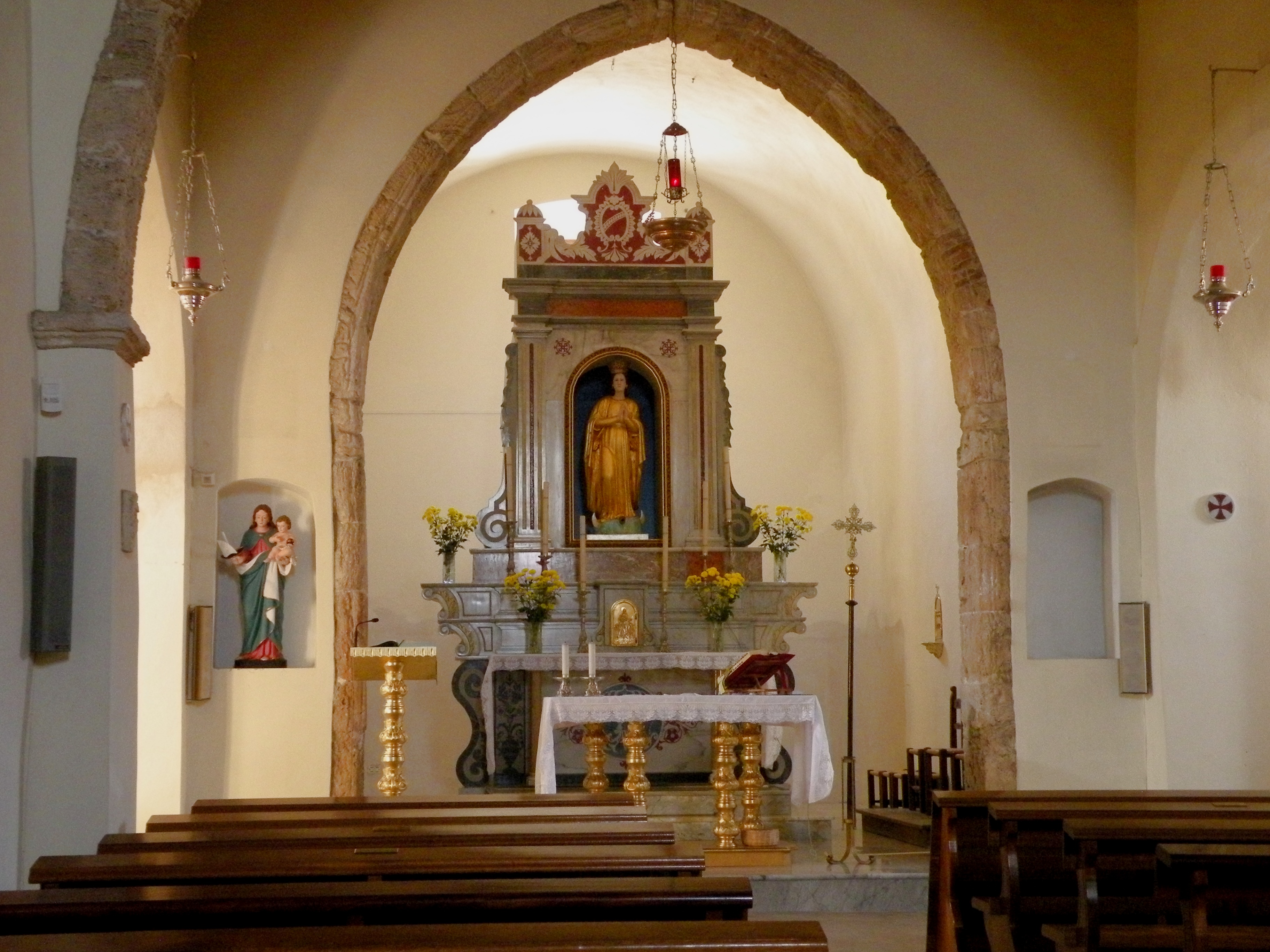
The current marble altar was built in 1911, after a fire destroyed the original wooden one. At the center of the altar is a 17th-century statue of the Immaculate Virgin , protected in a niche.
On the back of the altar is a walled commemorative plaque commemorating the year of construction and the promoters of the project: the parish priest Antonio Maria Lussu and the mayor Giovanni Lussu, father of Emilio Lussu.
This detail strengthens the profound bond between the church and the historical memory of Armungia, placing the Lussu family among the protagonists of the town's public and religious life.
The Holy Cross and the mysterious panels
In front of the church, in the square, stands the Holy Cross , made of wrought iron by local craftsmen. The column supporting it bears a bas-relief inscription with the date August 15, 1905, the day of its consecration.
Inside the church, set into the arches of the nave, are some walled panels whose provenance and meaning are unknown with certainty, adding an element of mystery and iconographic interest.
The other churches of Armungia
In 1833, Abbot Vittorio Angius documented the presence, in addition to the parish church, of two subsidiary churches : the Church of San Giovanni and the Church of San Sebastiano. Both were located near the Nuraghe , "at the eastern edge of the town," but today they have disappeared.
Instead, on the hill that closes the town to the west, the small country church dedicated to the Madonna di Bonaria still stands today, built in the last decades of the nineteenth century, and still linked to local religious celebrations.
Where
Piazza Chiesa, 09040 Armungia SU, Italia